Speaker for 16th October 2018
Coleraine Probus meet "Robbie Burns"
This morning’s speaker, Jim Fairbairn, was introduced to the members, the title of his talk being “Robbie Burns”. Jim thanked the President for his kind invitation and brought felicitations from Portballintrae Probus Club. Jim gained knowledge of Robbie Burns’ literature when he was President of The London Burns Club which was twinned with the London, Ontario club.
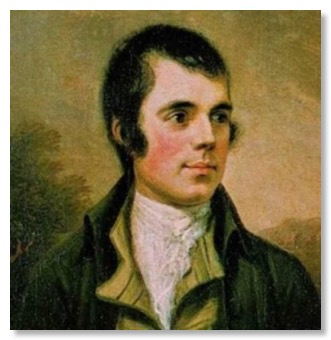
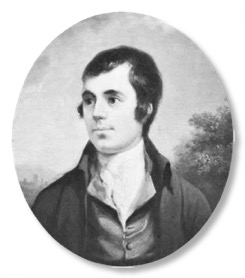
Burns was born 25th January 1759 and died in Dumfries on 21st July 1796 aged 37years. He is regarded as a pioneer of the Romantic Movement and became a source of inspiration for the founders of liberalism and socialism in fact the Russians were fond of Burns for his socialistic leanings. The son of a tenant farmer Burns received a relatively good education and from a young age immersed himself in the classics, which would influence his later writings. With over 700 poems and 250 letters published by Burns, mostly in the Scottish dialect and in the most impeccable form, show that he was no leisurely writer. The first collection of Burns poems was published in Kilmarnock on 31st July 1786, just ten years before his death.
Jim’s expert analysis of Burns’ poems showed how relevant he is today. Burns often used small subjects to express bigger ideas. We live in a time of considerable progress although it could be argued that mankind, in spite of this, cannot be trusted with the management of the planet. Burns was concerned about the welfare of a mouse (In the poem "To a Mouse", (see 1 below) while today aggressive development can result in the disappearance of wildlife.
In "Holy Willie's Prayer", (see 2 below) written in 1785, and considered the greatest of all Burns' satirical poems. In it, the reader finds one of the finest satires by any poet, and a withering attack on religious hypocrisy. While "Tam O'Shanter", one of Burn's longer poems (too long to be included below), can be seen as a sobering message, especially when we consider 'drink drive' campaigns!
Known the world over "Auld Lang Syne" (see 3 below), and sang without an understanding of the words, was written after Burns had seen a friend turn away from him so not to be recognised. He couldn't repay the one shilling he owed to the poet. Burns said that he valued friendship more than money, and friends shouldn't be parted, so share a drink, for old times sake and still be friends. Perhaps Burns’ poems have something relevant to say to our generation.
(Thanks to Graham for a lot of help with this report - WebEd)
Footnote 1: Members can listen to all 716 Robbie Burns poems read by well know actors and volunteers. These are listed in alphabetical order on this special BBC website. To visit the site, 'Click' on this link (this will open in a new window).
Footnote 2: Should you wish to read some of Burns poetry, as noted 1, 2, and 3 in the report above, just 'Click' on the image below: